Payday Loans in Australia
Key takeaways
- A payday loan in Australia is legally a Small Amount Credit Contract (SACC): a loan of up to $2,000 repaid over a term of 16 days to 12 months, regulated under the National Consumer Credit Protection Act and overseen by ASIC.
- SACC fees are capped by law rather than charged as interest. The legal maximums are a 20% establishment fee plus a 4% monthly fee, both calculated on the amount borrowed rather than a reducing balance; at the ceiling, $1,000 over 6 months costs up to $440 in fees ($1,440 to repay).
- Approval is never guaranteed. Licensed Australian lenders are legally required to assess affordability under responsible-lending rules, so 'guaranteed approval' or 'no credit check' offers are a warning sign, not a feature.
- Perfect Payday is a free credit referral service, not a lender. It passes applicant details to a panel of licensed lenders who assess each application and set any rate.
- Cheaper alternatives often exist and are worth checking first, including an interest-free Centrelink Advance Payment, a No Interest Loan (NILS) with no interest or fees, and free advice from the National Debt Helpline on 1800 007 007.
Quick honesty note. Perfect Payday is not a lender. It’s a trading name of Tiny Ventures (ABN 52 168 226 480), Credit Representative No. 516845: a free credit referral service. When you apply, we may pass your details to a panel of licensed lenders who assess your application and set any rate. We don’t make that decision, and we may receive a fee if you proceed. This page explains how payday loans in Australia actually work, including when a cheaper option would serve you better.
Payday loans in Australia are small, short-term loans designed to cover an unexpected gap until your next pay or payment. Legally they’re called Small Amount Credit Contracts (SACCs), and the fees you can be charged are strictly capped by law. This page walks through what they are, what they can cost (with an illustrative maximum), who’s eligible, how the application and referral process works, and the cheaper alternatives worth checking first.
What is a payday loan? (Small Amount Credit Contracts)
A payday loan is the everyday name for a Small Amount Credit Contract, or SACC. It covers loans of up to $2,000, repaid over anywhere from 16 days to 12 months, and it’s regulated under the National Consumer Credit Protection Act and overseen by ASIC, the corporate regulator.
The “payday” name comes from the original idea of borrowing against your next pay packet. In practice, terms now stretch across several months, and lenders can count regular income (including some Centrelink payments) when they assess affordability.
Because these loans are small and short, lenders don’t charge a traditional interest rate. Instead, the law lets them charge a capped establishment fee and a capped monthly fee, which we break down next. For a deeper walkthrough, see our guide on how payday loans work.
How much do payday loans cost? The legal fee caps
This is the most important part of the page, so let’s be precise. A SACC lender cannot charge an open-ended interest rate. By law the fees are capped at:
- Establishment fee: up to 20% of the amount you borrow.
- Monthly fee: up to 4% of the amount you borrow, per month.
- A government fee may also apply, and default fees are capped if you miss repayments.
These are maximums, not set prices. The licensed lender who assesses you decides the actual fee within those caps, based on your circumstances. Our payday loan fees explained guide unpacks each fee in detail.
What the caps mean for what you repay
Both caps are worked out on the amount you borrow, not on a balance that shrinks as you repay. That makes the cost of a SACC fixed the moment you sign: borrow more and the capped fees rise in proportion, stretch the term and you add another 4% for every extra month. Here is what that ceiling looks like in dollars. These are legal maximums, not quotes: the licensed lender who assesses you sets the actual figure somewhere at or under them.
| You borrow | Term | Establishment fee (max 20%) | Monthly fee (max 4%) | Maximum total fees | Maximum to repay | ≈ Weekly | ≈ Fortnightly |
|---|---|---|---|---|---|---|---|
| $500 | 3 months | $100 | $60 (4% x 3) | $160 | $660 | ~$51 | ~$102 |
| $1,000 | 6 months | $200 | $240 (4% x 6) | $440 | $1,440 | ~$55 | ~$111 |
| $2,000 | 12 months | $400 | $960 (4% x 12) | $1,360 | $3,360 | ~$65 | ~$129 |
Instalments are simply the maximum total divided evenly across the term (13, 26 and 52 weeks respectively) so you can see what the ceiling feels like per pay cycle. A lender’s actual schedule and figures will differ.
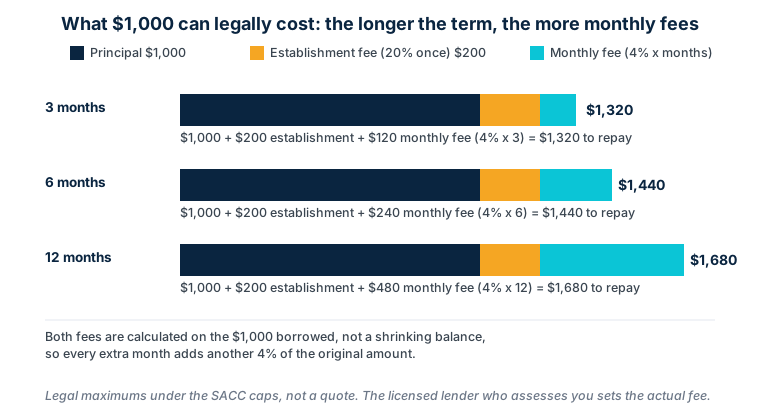
For any other amount or term, see the full cost table, or model your own figures with the payday loan cost calculator. You can cross-check either against the free calculator on ASIC Moneysmart.
The protected-earnings rule (this one protects you): by law a lender generally can’t sign you up to a SACC if your total SACC repayments would exceed 10% of your net income. If a lender ignores that rule, it’s a warning sign, and grounds for a complaint to AFCA.
Am I eligible for a payday loan in Australia?
Eligibility is set by each licensed lender, but most ask that you:
- Are at least 18 years old and an Australian citizen or permanent resident.
- Have a regular income paid into a bank account. This can include wages, and many lenders accept some Centrelink payments.
- Can show recent bank statements (lenders read these to check affordability, not just a credit score).
- Have an active mobile number and email, and a valid form of ID.
A lender must assess whether the repayments are affordable for you under responsible-lending law. That’s why no honest lender or referral service can promise approval.
Be wary of “guaranteed approval”, “instant approval” or “no credit check”. Licensed Australian lenders are legally required to assess your affordability before lending. Applying never guarantees approval, and anyone claiming otherwise is a red flag. Learn how to check a lender is legitimate.
Even with a poor credit history you may still be considered, because affordability matters more than a score. See loans for bad credit, and if you receive benefits, our page on Centrelink loans covers your specific options.
How the application and referral process works
Perfect Payday is a referral service, so the process has a few clear steps.
- You apply through us (free). You complete one short online form with your details, income and what you’d like to borrow. There’s no cost to apply.
- We refer you to our panel of licensed lenders. We pass your details to lenders who may be able to help. They (not us) assess your application, verify your information, and decide whether to make an offer.
- A lender makes any offer and sets the rate. If a licensed lender approves you, they present a contract showing the exact fees and repayments. Read it carefully before you sign.
- Funds are transferred. Once you accept and the lender finalises everything, the money is sent to your account. Some lenders can do this the same day, though speed is never guaranteed.
Because the decision sits with the lender, we can’t tell you in advance whether you’ll be approved or what you’ll pay. We can only connect you with lenders who might.
Types of short-term and small loans
“Payday loan” is an umbrella term people use for several related products. Here’s how the common ones fit together:
| Loan type | What it usually means | Where to read more |
|---|---|---|
| Small loan / SACC | Up to $2,000, fees capped by law | Small loans |
| Payday advance | Wage-advance / pay-on-demand apps and short advances | Payday advance |
| Same-day loan | A loan a lender may fund the same day | Same day loans |
| Instant cash loan | Marketing term for a fast online cash loan | What “instant” really means |
| Centrelink loan | A short-term loan that accepts benefit income | Centrelink loans |
| Bad-credit loan | Assessed on affordability, not just credit score | Loans for bad credit |
Loans above $2,000 are usually Medium Amount Credit Contracts (MACCs) or standard personal loans, which are structured differently and can work out cheaper for larger amounts over longer terms.
Pros and cons of payday loans
Payday loans serve a narrow purpose. They can help in a genuine short-term squeeze, but they’re an expensive way to borrow, so it’s worth weighing both sides honestly.
| Pros | Cons |
|---|---|
| Fast: some lenders fund the same day | High cost relative to the amount borrowed |
| Small amounts available ($300–$2,000) | Easy to roll into a cycle of repeat borrowing |
| Fees are capped and transparent by law | Missed repayments add default fees |
| Accessible with imperfect credit | Not suitable for ongoing or large expenses |
| Centrelink income often accepted | Cheaper options usually exist (see below) |
If you find yourself needing repeat payday loans, that’s a signal to pause and get free advice. It’s almost always cheaper than borrowing again.
Cheaper alternatives worth checking first
Because this is your money, we’d rather you start with the lowest-cost option that fits. Often something here will beat a payday loan outright:
- Centrelink Advance Payment: interest-free. If you’re on eligible payments, you can bring part of your future payment forward and repay only what you took. See Services Australia.
- No Interest Loan (NILS): no interest, no fees. Up to $2,000 for essentials via Good Shepherd. Call 13 NILS (13 6457) or visit the NILS locator.
- National Debt Helpline: 1800 007 007. Free, confidential financial counsellors (not salespeople) who can help you find options you might have missed. More at ndh.org.au.
- Talk to who you owe. Many utilities and councils offer hardship plans that beat taking on new debt.
For a fuller comparison, ASIC’s Moneysmart payday loans guide lays out the alternatives and the true cost of short-term borrowing.
The bottom line
Payday loans in Australia are small, fast and tightly regulated, with fees capped at a 20% establishment fee plus 4% per month. They can suit a genuine one-off shortfall, but they’re costly for what you get, and a Centrelink Advance, NILS loan or free financial counselling will often serve you better.
If you’ve weighed the cheaper options and a small short-term loan is still the right fit, you can apply below. We’ll pass your details to a licensed lender who assesses affordability and makes any decision. Applying is free and never guarantees approval.
Work out the legal maximum cost
See the most a payday loan (a Small Amount Credit Contract) can legally cost in Australia, capped at a 20% establishment fee plus a 4% monthly fee. This is an illustrative maximum: your actual rate depends on the licensed lender who assesses you.
Most it can legally cost
- Establishment fee (max 20%)$200
- Monthly fees (max 4% × 6)$240
- Maximum cost of credit$440
- Most you would repay$1,440
- ≈ per fortnight$111
Illustrative only, capped by law. A Centrelink advance or a No Interest Loan (NILS) may cost $0 in fees.
Frequently asked questions
What is a payday loan in Australia?
A payday loan is legally a Small Amount Credit Contract (SACC): a loan of up to $2,000 repaid over 16 days to 12 months. Fees are capped by law at a 20% establishment fee plus a 4% monthly fee.
How much do payday loans cost in Australia?
By law a SACC lender can charge at most a 20% establishment fee plus a 4% monthly fee, with no separate interest on top. Both are worked out on the amount you borrow, so a longer term means more monthly fees. At the legal maximum, $1,000 over 6 months costs up to $440 in fees, or $1,440 to repay. Your actual rate depends on the licensed lender who assesses you.
Can I get a payday loan with bad credit or on Centrelink?
Possibly. Licensed lenders look at your overall affordability, not just a credit score, and many accept Centrelink income. But every lender must assess affordability under responsible-lending law, so approval is never guaranteed.
Is 'guaranteed approval' or 'no credit check' real?
No. Licensed Australian lenders are legally required to assess your affordability before lending. Any site promising guaranteed approval, instant approval or no credit check is a red flag, not a feature.
How fast can I get the money?
Some licensed lenders can transfer funds the same day or within 48 hours once approved, often depending on your bank. Speed is never guaranteed and depends on the lender and your circumstances.
Is Perfect Payday a lender?
No. Perfect Payday is a free credit referral service. We pass your details to a panel of licensed lenders who assess your application and set any rate. We are not a lender and applying never guarantees approval.
Are there cheaper alternatives to a payday loan?
Often, yes. A Centrelink Advance Payment is interest-free, a No Interest Loan (NILS) charges no interest or fees, and the National Debt Helpline (1800 007 007) offers free advice. Always check these first.